
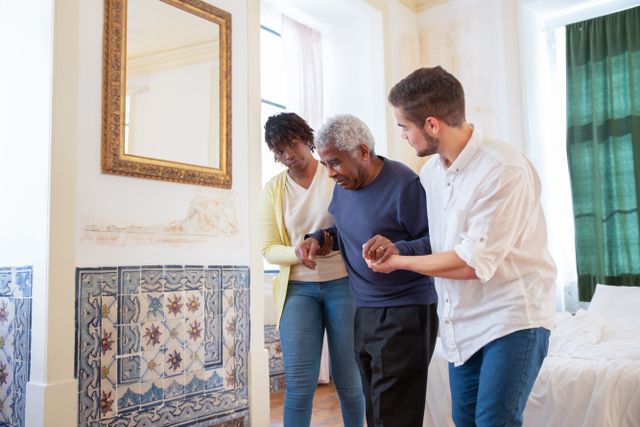
If you are with someone who has just fallen
Call 999 if they may have hurt their head, neck, back or hip, or if they cannot get up. Do not try to lift them yourself. Keep them warm and comfortable until help arrives.
Call NHS 111 (or use 111 online) if they are in pain, injured or unwell but the situation is not an emergency.
A carer, family member or friend is not a substitute for an ambulance crew or a clinician. If you are unsure, ask for medical advice rather than waiting to see what happens.
A fall at home can leave everyone shaken, including the person who fell and the relative who gets the phone call. Within minutes you are trying to work out how badly they are hurt, whether to wait and see, and who to ring.
Here is the short answer. The symptoms to look for after a fall include new pain, swelling or bruising, difficulty moving or putting weight on a limb, dizziness, vomiting, confusion or unusual drowsiness, changes in speech, vision or balance, and any change in behaviour that is out of character. Some of these need a 999 call, some need NHS 111, and some are a reason to speak to a GP. You cannot judge how serious a fall was simply by looking at someone, so when in doubt, ask for advice.
The rest of this guide explains what each symptom can mean, what to do in the first few minutes, how to keep an eye on someone afterwards, and how to lower the chance of another fall. It is written for families in England, and it is general information, not a diagnosis. Social care arrangements and NHS access routes differ in Scotland, Wales and Northern Ireland, so if you live elsewhere in the UK, check your own national health service for local contact routes.
Why do falls matter so much for older people?
Anyone can fall, but the likelihood rises with age. Government public health guidance says around a third of people aged 65 and over, and around half of those aged 80 and over, fall at least once a year. The same guidance describes falls as often preventable, and links them with pain, injury, loss of confidence and loss of independence.
There are two separate worries after a fall: the injury itself, and what the fall might be telling you. Bones can be weaker, particularly where someone has osteoporosis, so a fall from standing height can cause a fracture. Public health guidance notes that more than three million people in the UK have osteoporosis and that these “fragility fractures” most commonly affect the spine, wrists and hips.
A fall can also be the first visible sign of something else, such as a new medicine side effect, low blood pressure, an infection, poor eyesight or weakening muscles. That is why even a fall with no obvious injury is worth mentioning to a GP.
When should you call 999 after a fall?
Call 999 straight away if the person who has fallen may have injured their head, back, neck or hip, or if they cannot get up. That is the NHS’s own advice for falls.
For a head injury, the NHS also lists a wider set of signs that need a 999 call. In plain English, call 999 if the person who hit their head:
- was knocked out and has not woken up, or cannot stay awake or keep their eyes open
- has a seizure (fit)
- has problems with vision or hearing
- has clear fluid coming from the nose or ears, or bleeding from the ears, or bruising behind the ears
- has a black eye but did not hit their eye
- has new numbness or weakness in any part of the body
- has difficulty walking, with balance, understanding, speaking or writing
- has a head wound with something in it, or a dent in the head
- has a change in behaviour, such as becoming more irritable, distracted or losing interest in what is going on around them
- fell from a height of more than one metre or more than five stairs
Severe hip pain after a fall, being unable to walk or put weight on a leg, or tingling or loss of feeling in the hip or leg are also reasons to call 999 or go to A&E, according to the NHS. If you call, tell the call handler about any medicines the person takes, and have them ready for the ambulance crew.
Do not drive someone with a head injury to A&E yourself. If you are advised to go to hospital, follow the instructions you are given.
When should you call NHS 111 instead?
NHS 111 is the right route when someone has fallen and may be in pain, injured or unwell but there are no signs that need an emergency ambulance. You can call 111 or use the online service.
After a head injury specifically, the NHS says to get urgent advice from 111 if the person:
- is being sick (vomiting)
- feels dizzy
- takes a medicine that thins the blood, or has a condition that thins the blood
- had been drinking alcohol or taking drugs when they fell
- has any other symptom that worries you
That blood-thinner point is worth stressing. Some older adults take anticoagulants or similar medicines for heart conditions, strokes or blood clots. If your relative takes one and has hit their head, ring 111 even if they seem completely well, and follow the advice you are given about whether they need to be assessed in person.
You know your relative better than anyone. If something just does not seem right, that is a good enough reason to call.
What should you do in the first few minutes after a fall?
Stay calm and take a moment before you do anything else. A steady approach protects the person who fell and protects you.
- Check for danger. Is there something nearby that could hurt either of you, such as broken glass, a hot kettle, or water on the floor?
- Talk to them. Ask how they feel and where it hurts. Listen to how they answer as well as what they say, because slurred speech, confusion or an unusual response matters.
- Look for the emergency signs in the 999 list above. If any are present, call 999 and stay with them.
- Do not rush to get them up. Ask them to stay where they are for a few minutes while you both take stock.
- Keep them warm and comfortable. Cover them with a blanket or coat and put a cushion under their head if they are lying on a hard floor and it is comfortable for them to do so.
- Only help them up if they can do so safely. The NHS advises carefully helping someone up if they are able, but not trying to lift them yourself.
- Call for advice. Even if they feel fine, think about whether 111 or the GP should be told, particularly if they hit their head or take blood-thinning medicine.
If they feel able to get up
The NHS describes a sequence for someone who feels able: take your time, roll onto the side, push up onto hands and knees, crawl to something stable such as a heavy piece of furniture, bring one foot flat on the floor, rise slowly, and then sit and rest. Stay close in case they feel faint.
What not to do
- Do not lift or drag them, however much you want to help. You could worsen an injury or hurt your own back.
- Do not move someone who may have hurt their head, neck, back or hip. Wait for help.
- Do not leave them alone if you are worried about their head or about drowsiness.
- Do not assume that “no obvious injury” means “no injury”.
- Do not drive someone with a head injury to hospital yourself.
What if the person cannot get up?
If they cannot get up, the NHS says to call 999. Some people fall when they are alone and cannot reach the telephone. In that situation, the NHS suggests using a phone or personal alarm if one is within reach, shouting or banging on a wall or floor to attract attention, covering up to stay warm, and gently moving the arms and legs or rolling from side to side. It also suggests changing position about every 30 minutes to help prevent pressure sores.
If you are the family member who finds them, the advice is the same as above. Call 999, keep them warm and talk to them calmly, and do not try to lift them yourself.
Which symptoms could follow a fall?
Different injuries produce different signs. The list below is a guide to what to watch for, not a way to diagnose at home.
Pain, swelling and bruising. New pain that is getting worse, a limb that looks swollen or misshapen, or large, spreading bruises are all reasons to seek medical advice. Older skin bruises more easily, so bruising alone is not always serious, but it can sometimes go with a deeper injury.
Trouble moving or taking weight. If someone cannot stand, cannot put weight on a leg, or finds it very painful to move an arm, that may mean a fracture. The NHS says a broken hip needs treatment in hospital straight away. Its listed symptoms include pain in the hip, upper leg or groin, being unable to stand or put weight on the leg, difficulty moving the hip or leg, a leg that sits at an odd angle or looks shorter, and swelling or bruising around the hip and upper leg.
Wrist, arm and shoulder pain. People often put out a hand to break a fall. Sudden pain, swelling or an unusual shape in the wrist, forearm or shoulder should be checked.
Back, chest or tummy pain. Persistent or worsening pain in the back, ribs, chest or abdomen, or pain when breathing, needs medical advice. A fall can injure parts of the body that are not easy to see.
Cuts and grazes. Minor cuts can be cleaned and covered, but a deep wound, bleeding that does not stop, or a wound with something in it needs medical attention. For a head wound, see the 999 and 111 lists above.
Feeling generally unwell. Faintness, a racing heart, paleness, sweating, new shortness of breath, or someone who simply seems “off” are good reasons to ring 111. These signs do not tell you what is wrong, but they do tell you that a clinician should find out.
Having none of these symptoms does not guarantee that nothing is wrong. How someone looks and feels in the minutes after a fall is not a reliable guide, so if you are worried, ask a professional.
What are the head injury symptoms to watch for?
Most head injuries are not serious, according to the NHS, but it advises getting medical help for any symptoms. A head injury can cause concussion, which is a temporary injury to the brain.
Signs worth noting include:
- confusion, or being less alert than usual
- drowsiness, or difficulty staying awake
- repeated vomiting
- dizziness, loss of balance or unsteadiness
- headache that is getting worse
- blurred or double vision, or ringing in the ears
- slurred or muddled speech
- weakness, numbness or tingling
- changes in mood or behaviour that are not like them
The NHS puts some of these (such as being unable to stay awake, a fit, new weakness or a change in behaviour) in the 999 category, and others (vomiting and dizziness) in the 111 category. If you are not sure which applies, ring 111 and describe what you see.
Can symptoms appear later?
Yes. Some injuries are not obvious straight away, which is why careful observation matters. The NHS says that after a minor head injury, someone can have symptoms for up to two weeks. It advises seeing a GP if symptoms last longer than that, or if you are unsure whether it is safe to return to normal activities.
I have deliberately not given a precise timetable for when specific complications might appear. Timings vary and general rules can give false reassurance. The safest principle is that any new or worsening symptom after a fall, at any point, is worth a call to 111 or the GP.
How should you monitor someone after a fall?
If a clinician has advised that your relative can stay at home, or if they have had a minor head injury and have been told they do not need to go to hospital, home observation is usually part of the plan.
For a minor head injury, the NHS recommends that an adult stays with the person for at least the first 24 hours. It also says they do not need to stay awake if they are tired, but you should be able to rouse them and notice anything unusual. The NHS adds that resting, using an ice pack wrapped in a cloth, and taking paracetamol for headaches are the usual home measures. It advises against driving, alcohol and sleeping tablets until the person has recovered, and against contact sports for at least three weeks.
A short note can help you and the professionals you speak to. Jot down:
- the date, time and place of the fall, and what happened as far as you know
- whether they hit their head or lost consciousness
- how they were straight afterwards
- any new symptoms and when you first noticed them
- the medicines they take, particularly blood thinners
- who you spoke to (999, 111, GP) and what you were told
This is not medical monitoring. It simply means you can give a clear account if you need to ring 111 or see a doctor.
If your relative lives with dementia, or has difficulty communicating, they may not be able to tell you that something hurts. Look out for changes in behaviour, such as more agitation, refusing food, withdrawing, guarding a limb, wincing when moved, or new confusion. These are good reasons to seek advice even when they cannot say what is wrong.
Why are some older adults at higher risk?
Falls rarely have a single cause. Public health guidance describes them as the result of several risk factors working together, including muscle weakness, poor balance, visual impairment, taking several medicines and the effects of some medicines, hazards in the home and particular medical conditions.
The NHS lists further causes, including conditions that affect balance or mobility (such as arthritis, stroke or Parkinson’s disease), low blood pressure, side effects of some medicines, problems with eyesight or hearing, and dementia.
Three points deserve emphasis for families:
- Medicines. Some medicines can make someone dizzy or unsteady, and blood thinners change what is a sensible response to a head injury. A GP or pharmacist can review medicines if you think they are contributing to falls.
- Frailty and bone health. The same fall can cause very different injuries depending on bone strength, general health and body weight.
- Previous falls. A history of falls is a reason to ask for a falls assessment, not to accept falls as “just part of getting older”.
How do you get medical follow-up?
After any fall, the NHS recommends seeing a GP, even if there was no serious injury, so that the reason for the fall can be explored.
The NHS says a GP will usually check balance and may refer someone to a specialist falls service. That service may look for muscle weakness, weak bones or eyesight problems, offer strength and balance training, check that the home is safe, suggest adaptations and review medicines.
In many areas you can refer yourself to a falls service without seeing a GP. The NHS suggests asking the GP surgery reception team, checking the practice website, contacting your local integrated care board (ICB) or searching online for NHS services near you.
You can also ask your local council for a free care needs assessment if you are worried about falls. The NHS says anyone can ask for one and that it can look at changes to make a home safer. This is separate from medical follow-up, and the council can help whether or not someone pays for their own care.
What role can home care play after a fall?
Home care can be a helpful part of recovery and everyday safety, but it is not a medical or emergency service. A carer does not diagnose injuries, and a care visit is not a replacement for an ambulance, A&E or a GP. If you think your relative has been seriously hurt, always seek medical help first.
Once the immediate medical picture is clear, regular support at home may help in practical ways. Depending on the provider and the care plan, a carer might:
- help with washing, dressing and getting around the home, particularly while someone is stiff or sore
- prepare meals and encourage drinks, since the NHS and Age UK both link poor nutrition and hydration to dizziness and falls
- notice and report changes in how someone is, such as new confusion, reduced appetite or increased unsteadiness, to the family or the care provider’s office
- keep floors clear, spot hazards and support safe routines
- provide company and reassurance, which can help rebuild confidence
- give family members a break (see respite care below)
What is available varies between providers and depends on an individual assessment, so ask exactly what is and is not included. For example, Proritas Healthcare provides home care for older people as visiting support from one hour per visit, and also offers live-in care and respite care. Our upcoming guide, What Is Home Care? A Guide for UK Families, explains the different types in more detail.
How can you reduce the chance of another fall?
Falls are not inevitable. Age UK points out that there is a lot you can do to lower the risk, even after a previous fall. Here are practical areas to look at together with your relative, with their agreement, since it is their home.
Move more, safely. Both the NHS and Age UK stress that staying active is one of the best things people can do, because strength and balance help prevent falls. The NHS guidelines for older adults recommend being active every day and doing activities that improve strength and balance at least twice a week. A GP or falls service can suggest suitable classes or exercises.
Check footwear. The NHS advises shoes or slippers that fit well, do not slip off and have a good grip. Age UK suggests high-sided shoes with low heels, thin soles and good grip, and says to avoid walking around in bare feet, socks or tights indoors.
Improve lighting. Age UK recommends well-lit stairs and hallways, and a night light by the bed. A motion-activated light can help if your relative gets up at night.
Clear trip hazards. Tidy walkways and stairs, move rugs and mats away from the tops and bottoms of stairs, and secure or remove trailing wires and frayed or wrinkled carpets. The NHS also advises against too much clutter.
Make the bathroom safer. Non-slip mats in the bath or shower and grab rails help. The NHS also suggests safety rails on steps where needed.
Think about walking aids. A walking stick, frame or rollator can help the right person, but it should be properly chosen and fitted. A GP, physiotherapist or occupational therapist can advise, because a poorly fitted aid can itself cause a fall.
Get eyes and ears checked. Age UK recommends eye tests at least every two years and prompt attention to hearing problems, because both affect balance. The NHS says ear problems can affect balance too.
Eat and drink well. Not eating and drinking enough can cause light-headedness or faintness, according to the NHS.
Look after bone health. The NHS suggests foods with calcium and enough vitamin D. Age UK notes that it is hard to get enough vitamin D from diet alone, and that a supplement is worth considering in autumn and winter, or all year if someone is mostly indoors. Ask a pharmacist or GP for advice before starting a supplement.
Plan for a fall. The NHS suggests wearing a personal alarm or carrying a mobile phone. Age UK adds that personal alarms connect to a response centre, and that bed or chair sensors can alert someone if a person does not return within a set time. These systems help someone get help quickly, but they do not prevent falls.
Ask about home adaptations and checks. Your local council may offer home safety checks or handyperson schemes, and some local Age UK organisations do too.
What if your relative keeps falling?
Repeated falls are a signal to look underneath. They can point to changes in health, medicines, vision, blood pressure, strength or thinking, and they often respond to treatment or support. Ask the GP for a falls assessment, or use a local self-referral route if one exists. Make a note of when, where and how each fall happened, because patterns (for example, always at night, or always after standing up) help clinicians.
How can you support an older relative after a fall?
A fall can knock someone’s confidence even when the injuries are minor. Some people become frightened of moving around and cut back on activity, which can weaken muscles and make another fall more likely.
- Listen first. Ask how they are feeling about it before you suggest solutions.
- Avoid blame. Phrases like “I told you not to climb on that” rarely help.
- Keep them involved. Decisions about their home and routines are theirs to make. Offer options and explain your worries, rather than taking over.
- Encourage gentle movement once a clinician says it is safe, and ask the GP or falls service about suitable exercise.
- Make a plan together. Agree who to call, where the phone or alarm is kept, and who has a key.
- Look after yourself too. Family carers can become worn out. A short break through respite care, a friend or a local service can help you keep going.
Age UK’s advice line (0800 678 1602, open 8am to 7pm every day, according to the NHS) is a free source of support and information for older people and their families.
Taking the next step
If a fall has made you rethink how safe your relative is at home, you do not have to work it all out at once. Start with medical advice about the fall itself, then think about the longer term: what help would make everyday life easier and safer, and who can provide it.
Arranging care is a significant decision, and it is fine to take it slowly. Proritas Healthcare offers a free, no-obligation consultation where you can talk through the support your family member needs, their routines and preferences, and any medical needs. You can book a free consultation, get in touch, or read more about Proritas Healthcare. Whether care at home is the right fit depends on your relative’s needs and wishes, and nobody should feel pressured into a decision.
Frequently asked questions
What symptoms should I look for after an older person falls?
Look for new pain, swelling or bruising, difficulty moving or standing, dizziness, vomiting, confusion, unusual drowsiness, changes in speech, vision or balance, and any behaviour that is out of character. Some of these, such as being unable to stay awake, a fit or new weakness, need a 999 call. Others, such as vomiting or dizziness after a head injury, need advice from NHS 111.
Can an older person have a serious injury without obvious symptoms?
Yes. How someone looks and feels straight after a fall is not a reliable guide to whether they are injured. If they hit their head, take blood-thinning medicine, or you are simply worried, ring NHS 111 for advice rather than waiting to see what develops.
When should I call 999 after a fall?
Call 999 if the person may have hurt their head, neck, back or hip, or if they cannot get up. For a head injury, also call if they were knocked out and have not woken, cannot stay awake, have a fit, have clear fluid from the nose or ears, have new numbness or weakness, or their behaviour has changed. Severe hip pain or being unable to put weight on a leg also needs an emergency response.
What should I do if an elderly person falls and cannot get up?
Call 999 and stay with them. Keep them warm with a blanket or coat, reassure them and do not try to lift them yourself. If you cannot reach a phone because you are the one on the floor, the NHS suggests using an alarm if you can, calling or banging for attention, staying warm and changing position about every 30 minutes.
Can head injury symptoms appear later?
Yes, symptoms can be delayed or develop gradually. The NHS says someone with a minor head injury may have symptoms for up to two weeks. Ring 111 or see a GP for any new or worsening symptom, and see a GP if symptoms last longer than two weeks.
Should an older person go to A&E after every fall?
Not necessarily, but they should not be left without advice. If there are any emergency signs, call 999. If the person is in pain, injured or unwell, call NHS 111. After any fall, the NHS advises seeing a GP so the cause can be looked at.
Does an older person on blood thinners need extra care after a fall?
Yes. The NHS lists taking blood-thinning medicine, or having a condition that thins the blood, as a reason to get urgent advice from 111 after a head injury. Follow the advice you are given about whether the person needs to be seen in person.
How long should someone be watched after a fall?
After a minor head injury, the NHS says an adult should stay with the person for at least the first 24 hours. Beyond that, keep watching for new or worsening symptoms and seek advice if they appear. Longer-term, ask the GP about the reason for the fall.
What if the person has dementia and cannot say what hurts?
Watch for changes in behaviour or movement. More agitation, withdrawal, refusing food, guarding a limb, wincing when moved or new confusion can all signal pain or injury. Report these to 111 or the GP, and mention that the person may not be able to describe symptoms.
How can home care help after a fall?
Home care can provide practical day-to-day support, company and reassurance, and can help spot and report changes. It cannot diagnose injuries or replace emergency care or a clinician. Ask any provider what a care plan would include and how they would respond to a fall.
How can I make a home safer for someone at risk of falling?
Improve lighting, clear trip hazards, secure rugs and cables, use non-slip mats and grab rails in the bathroom, check footwear, and consider a personal alarm. Ask the GP about a falls assessment and your council about a care needs assessment or home safety check.
